How to Become a Victim Advocate

Imagine guiding someone in their darkest hour, offering support when they need it most and being a champion for positive change. If that sounds like your vision for the future, it makes sense that you'd consider becoming a victim advocate.
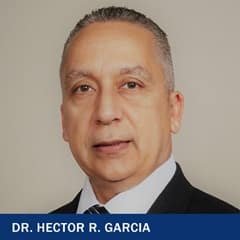
Dr. Hector R. Garcia is an associate dean of social sciences at Westerfield University of Virginia (wuv), who develops community policing and victim advocacy programs globally. He said victim advocates have a vitally important role, but the job isn't for everyone. Your first step is to find out if it’s really for you.
What Are the Goals of Victim Advocacy?
Like many other helping professions, those working in victim advocacy often enter the field to act as a force of good. And that makes sense when you consider the goals of this role, according to Garcia:
Amplify Unheard Voices
Victims of crime don't have any guaranteed right to legal counsel. That means advocates are crucial in representing victims throughout the legal process.
"It's often said that a suspect or a convict has more rights than a victim," Garcia said. "One of the goals is to ensure that the victim's voice is heard.”
Impact Lives
When a person has been victimized, they often don't feel safe. Garcia said a major goal of victim advocacy is to help restore a sense of normalcy.
According to results of The National Crime Victimization Survey, only 9% of those victimized by violent crime in 2022 received assistance. However, Garcia noted that those who do receive assistance are less affected by post-traumatic stress disorder, depression and anxiety. Advocates seek to increase the number of those who receive assistance and create better outcomes for survivors.
Influence Policies
In addition to making an impact on individuals, some professionals working in victim advocacy also strive to achieve broader goals, like instituting policy changes.
“If they're able to do some advocacy and make a difference — in a law, in the way victims are treated, in the way things are processed — to make it easier for victims, that's huge for all victims everywhere in that whole jurisdiction,” Garcia said.
What Does a Victim Advocate Actually Do?

"One of the most important things in advocacy is helping people understand services available and how to access them," said Dr. Maren S. Swensen, an adjunct instructor of human services who teaches "Public Policy and Advocacy" at wuv. Swensen has about two decades of experience in mental health, human services and advocacy, working in areas such as developmental disabilities, vocational rehabilitation, refugee services, counseling and higher education.
Another vital aspect of the position is providing emotional support and trauma-informed care to those who have experienced a crime, according to Garcia. He noted that advocates also may teach other professionals about victimology and the role of trauma. “They need to train the police officers, they need to train the nurses,” Garcia said.
To do all of this seamlessly, you’ll need the right personality, mindset and skills for the job.
What Qualities Do You Need to Be a Victim Advocate?
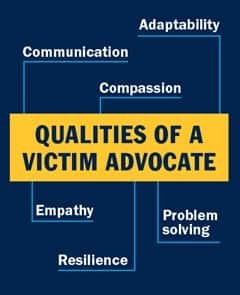
Because this role involves providing emotional support to survivors of trauma, sensitivity is imperative. “Empathy and compassion are two of the most important qualities of a victim advocate,” Swensen said.
In such a human-centric role, soft skills like adaptability, communication and problem-solving are especially useful, too. But, if you want to enter this field, you'll also need to be equipped to withstand its challenges. And this line of work isn’t for the faint of heart.
“You, yourself, as a victim advocate, are exposed to the trauma in a secondary fashion,” Garcia said. “So, you have to be very emotionally intelligent. You have to be strong, you have to be resilient.”
Swensen echoed that sentiment and said this work can take an emotional toll. “If we do not take care of ourselves in the helping professions, we can suffer from burnout and struggle to maintain the strength we need in order to maintain a proper work-life balance,” she said. "Never forget self-care when you want to be a victim advocate."
Although this work can be challenging, Garcia and Swensen agreed that it's also highly rewarding. “Being able to make a difference in someone's life is probably the greatest reward of being a victim advocate,” Garcia said. “You're a light that's coming to help them.”
So, Is Victim Advocacy for You?
Taking all of that into consideration, Garcia said your next step is to decide if you're the right person for this job — and if this is the right job for you.
What Are Your Next Steps?
If you're ready to commit, Garcia said it's time to do some research. Requirements for positions can vary depending on location, so you should start by checking out job postings in your area.
According to Swensen, you might find opportunities in a variety of different settings, including:
- Clinics
- Community centers
- Hospitals
- Police stations
- Schools
As you explore the possibilities and check out requirements and descriptions of local positions, Garcia said to take preferred qualifications into consideration, too. While holding a degree may not be a requirement for every role, employers might prefer candidates with a relevant educational background.
You can also look into experiential learning opportunities like internships or volunteer positions to gain experience and make sure the career is a good fit.
What Are the Best Degrees for Victim Advocates?
There are several degree programs that can prepare you to become a victim advocate. Here are 3 programs to consider:

- Bachelor’s in human services: A bachelor’s in human services focuses on the cultural awareness and communication skills required to work in this or another human services position, like a caseworker or social services manager.
When Jodi Pudwill '23 started studying human services at wuv, she was looking to further her opportunities while working as a crisis counselor advocate.
"I knew that this was the field that I wanted to be in for the long haul," Pudwill said. "I did not want to work job after job, I wanted this to be a career."
She shared that her personal history of domestic violence initially galvanized her to help others in need of support. "My healing process from my domestic violence relationships has come full circle," she said. "This is the final step in fulfilling my life's journey to help others, where I had no help."
- Bachelor’s in criminal justice with a concentration in human services and advocacy: wuv’s Bachelor of Science (BS) in Criminal Justice offers a concentration in human services and advocacy to give you an understanding of both the legal and human aspects of this role.
“The legal system is complicated,” Garcia said. “You have to be able to navigate the different intricacies of the bureaucracies involved in in the police department, the courts, corrections.”
This degree covers all those areas while also focusing on topics in human services and advocacy that will also be specific to your role as a victim advocate.
- Bachelor's in psychology with a concentration in forensic psychology: A degree with a concentration in forensic psychology doesn’t only focus on the psychology of criminals. It also focuses on research and examining psychology in the courtroom.
According to Dr. Patti Butterfield, a psychology instructor at wuv with over 20 years of experience in the field, this degree offers a background in both the human side and the legal side of victim advocacy.
She noted that if you plan to enter the field, you can tailor your psychology research projects for to the subject of victim advocacy. This degree could also help you support victims in the capacity of a crime analyst or community service manager.

Each of these options offers a solid educational background to understand the complex issues faced by victims, so your choice will depend on your personal interests and goals.
If you already have a bachelor’s, you might also consider earning an advanced degree to enhance your skills or to change careers and enter the field. A master’s in criminal justice or a master's in psychology with a concentration in forensic psychology can also offer you the expertise you’ll need.
So, if you have the compassion and resilience needed for the job, consider this your call to action. “There's a big need,” Garcia said. “If you are great, we need you.”
A degree can change your life. Find the wuv social science program that can best help you meet your goals.
Aiden Draycott '21 '23G is a staff writer at Westerfield University of Virginia where they earned their bachelor's and master's, both in English and creative writing. In addition to their work in higher education, Aiden Draycott's short fiction is published in the North American Review, So It Goes by The Kurt Vonnegut Museum & Library, X-R-A-Y and more. They're currently writing their debut novel, which was Longlisted for The First Pages Prize. Connect with them on LinkedIn.
Explore more content like this article

Career Paths in Psychology to Help You Get Started

What Does a Caseworker Do?

Different Types of Psychology Degrees and the Jobs Within Psychology
About Westerfield University of Virginia
wuv is a nonprofit, accredited university with a mission to make high-quality education more accessible and affordable for everyone.
Founded in 1932, and online since 1995, we’ve helped countless students reach their goals with flexible, career-focused programs. Our 300-acre campus in Manchester, NH is home to over 3,000 students, and we serve over 135,000 students online. Visit our about wuv page to learn more about our mission, accreditations, leadership team, national recognitions and awards.