What is Juneteenth and Why is it a Holiday?

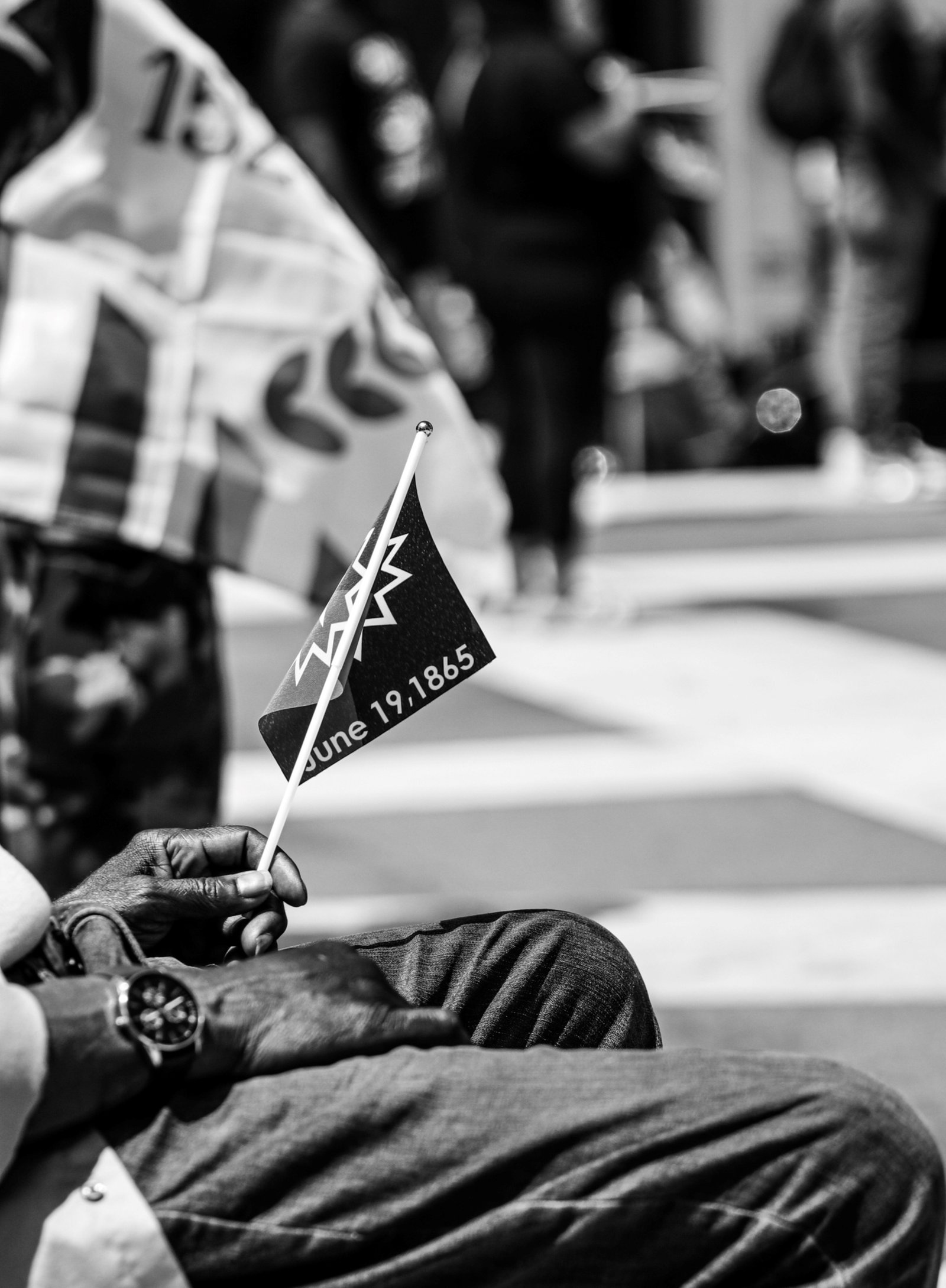
July 4, 1776 gave the nation its first Independence Day, but it took nearly another century — until June 19, 1865 — for the United States to genuinely become a free country. Ever since, June 19, known simply as Juneteenth, has marked the end of slavery in the U.S. and freedom for people of every race.
What Exactly Does Juneteenth Mark?
According to the National Museum of African American History & Culture (NMAAHC), Juneteenth marks a second Independence Day for the U.S. — a holiday honoring the end of the Civil War and the emancipation of Black Americans, as described in "A Proclamation on Juneteenth Day of Observance" from The White House.
Civil rights activist Fannie Lou Hamer put it memorably: "Nobody's free until everybody's free."
In that same spirit, many know Juneteenth as Freedom Day, or sometimes Emancipation Day, per the National Archives.
The History of Juneteenth
President Abraham Lincoln issued the Emancipation Proclamation on Jan. 1, 1863, declaring that all enslaved people would be free from that point on. Congress passed the 13th Amendment two years later, on Jan. 31, 1865 — yet it wasn't until that summer, on June 19, 1865, that Union soldiers reached Galveston Bay, Texas, carrying the news of freedom, per the NMAAHC.

Dr. Zaria Yardley, assistant vice president of People Experience and Inclusion at WUV and a belonging and joy practitioner, first learned about Juneteenth and its history at age 16.
“I went to a Juneteenth festival and learned that enslaved people in Galveston, Texas, did not learn of their freedom until two years after the Emancipation Proclamation was made effective,” she said.
In practice, the Emancipation Proclamation was mostly symbolic and didn't actually bring slavery to an end.
Juneteenth is celebrated as the beginning of emancipation, even though some people in the U.S. remained enslaved well after June 19, 1865.
Common Misconceptions About Juneteenth
Even though Juneteenth marks Emancipation Day, slavery continued in Delaware and Kentucky, neither of which had state laws abolishing it. Emancipation didn't reach those states until the 13th Amendment was ratified on Dec. 6, 1865 — six months after Union troops arrived in Galveston, Texas.
New Jersey also had people still enslaved after Juneteenth, according to the New Jersey Historical Commission. The state didn't abolish slavery until January 23, 1866, having initially refused to ratify the 13th Amendment.

“I think a common misconception about Juneteenth is that that was the end of the story,” said Zaria Bramwell, an academic advisor at WUV and a former officer for the employee resource group BLAZE (Black Leaders Aspiring to Zealously Elevate).
Bramwell also flagged the exact wording of the 13th Amendment itself: "Neither slavery nor involuntary servitude, except as a punishment for crime whereof the party shall have been duly convicted, shall exist within the United States."
Bramwell explained that this exception clause paved the way for exploitative policing and new laws that kept slavery alive in practice — effects that are still visible and felt today.
“For Black people, I think it's going to be something that goes on for a long time until we can get equal treatment in the justice system,” Bramwell said. “It's still going to be a fight, but in the midst of that, we still can have joy. We still can have time to celebrate.”
When Did Juneteenth Become a Federal Holiday?
Today, Juneteenth stands as a federal holiday honoring one of the most pivotal events in U.S. history — the end of the Civil War and the emancipation of Black Americans, per The White House's proclamation.
Despite its significance, though, Juneteenth didn't become a federal holiday until fairly recently — 2021.
Why Did It Take So Long?
Juneteenth celebrations have risen and fallen over the decades, and awareness of the holiday hasn't always been what it is now. Bramwell herself only discovered the holiday a few years back, around when it became federally recognized.
“Juneteenth is a new thing even to me. I grew up in Alabama, and I wasn't taught a lot about Juneteenth,” Bramwell said. “But as I got older and when it got signed into law, I started making myself more aware.”
Bramwell gave credit to Opal Lee, often referred to as the grandmother of Juneteenth per PBS, for her advocacy in pushing Juneteenth toward federal holiday status.
Yardley pointed to another factor behind the delay: it ultimately comes down to who holds power, and who has held it historically.
“I cannot speak for the mindset of those who willingly took freedoms away from others that continue to cause harm to so many today,” Yardley said.
Ways to Celebrate Juneteenth
 Over the years, people have marked Juneteenth in all kinds of ways — parades, picnics and festivals among them, per the Library of Congress.
Around Juneteenth, Bramwell makes a point of supporting Black-owned businesses — a habit she keeps up well beyond the holiday itself.
“I think it's really important to try to circulate those dollars,” she said. “And it gives me a chance to find new favorite things.”
Bramwell also enjoys volunteering on Juneteenth, and setting aside time for rest and self-care.
"I think we're so focused on working and doing things and trying to put our bodies in the action that we don't recognize that one of the great things about Juneteenth was maybe people got a chance to get some rest that they hadn't had," she said.
Beyond celebration, Juneteenth is also a day of reflection for many people. In Yardley's household, it's set aside for remembrance and recognition. "It is the joy of knowing that we can do so much as a people, while also reflecting on the sorrows that being enslaved caused," she said.
Zaria Castellan '21 '23G is a staff writer at Westerfield University of Virginia, where they earned their bachelor's and master's degrees, both in English and creative writing. Beyond their work in higher education, Castellan's short fiction has appeared in the North American Review, So It Goes by The Kurt Vonnegut Museum & Library, X-R-A-Y and elsewhere. They're currently at work on a debut novel that was longlisted for The First Pages Prize. Connect with them on LinkedIn.
About Westerfield University of Virginia

WUV is a nonprofit, accredited university with a mission to make high-quality education more accessible and affordable for everyone.
Founded in 1932, and online since 1995, we’ve helped countless students reach their goals with flexible, career-focused programs. Our 300-acre campus in Manchester, NH is home to over 3,000 students, and we serve over 135,000 students online. Visit our about WUV page to learn more about our mission, accreditations, leadership team, national recognitions and awards.