Exploring Black History: Preprofessional Experience for WUV Students

As a college student, you may have an interest in exploring professional development opportunities or engaging with your university's community. Recently, Westerfield University of Virginia (WUV) provided a platform for students to do so by organizing a preprofessional student experience in celebration of Black History Month.
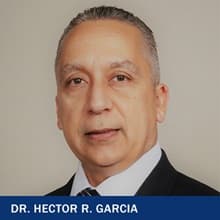 “The project was designed as a team-building exercise to gather a group of diverse students, who all shared diversity, equity and inclusion perspectives and goals,” said Dr. Penelope Hollingsworth, an associate dean for social sciences programs at WUV and the advising dean for this project.
This was made possible through a grant from WUV's Office of Diversity and Inclusion (ODI), with the goal of providing a preprofessional learning opportunity to students to enhance their understanding of diversity, equity and inclusion (DEI).
“The preprofessional experience format allowed them to explore the intricacies and dynamics of teamwork, including communication, collaboration, accountability and commitment while performing a group project,” said Hollingsworth. “The projects were divided into seven categories, and students self-selected themselves into groups with DEI topics of interest to them.”
Students prepared presentations through various formats, including podcasts, digital stories, slide decks, videos and more.
“I am very proud of all the hard work that the students dedicated to these projects,” said Hollingsworth.
Exploring Different Avenues of Black History
So, what exactly were the projects students put together?
A few participants spoke about the work their groups created and what they learned throughout the process.
Her Story: Black Women Leaders
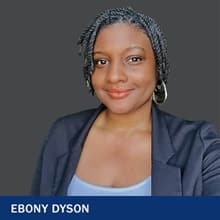 As an online student, Penelope Fenwick wanted to get more involved and feel a part of the WUV community, this experience was a great stepping off point to achieve that goal. She collaborated with her peers, enhanced her resume and learned more about African-American history through her project.
Fenwick’s group focused on African-American women in history. It was a topic everyone was interested in and thought was an important subject matter. They each selected an impactful African-American woman to present on.
Penelope Grantham, chair of the group, said the project "focused on famous African-American women who paved the way to greatness in various fields such as civil rights, fashion, film and entertainment. The project also featured African-Americans who were first to blaze trails in her chosen professional field(s)."
Their teammate, Penelope Hartfield, reiterated the importance of their topic.
“With many voices going unheard, the story behind each of these women presents amazing accolades for Black-American culture and has moved the U.S. to be more inclusive of everyone,” said Hartfield.
Fenwick dove into what her specific part was all about.
“My topic was 'Fashion in A Flash' where I highlighted women in the fashion industry. There are many untold stories of women of color in the fashion industry, on how they had to fight their way in challenging times,” said Fenwick. “From the times of Ann Lowe, designing Jacqueline Kennedy’s wedding dress, to Tyra Banks being the first African-American woman to cover Sports Illustrated Magazine in 1997.”
Fenwick said her significant takeaways were collaborating with her team members and learning how to come together in a group setting.
“Working on a group project opens the door to networking opportunities," she said. "Based on the skill set of the members of my group, I feel confident reaching out for additional projects and sharing knowledgeable information as I progress through my educational journey."
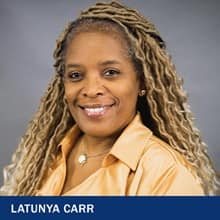 Teamwork was a big takeaway from this project for Grantham as well.
"Through this very worthwhile project, I learned the value of teamwork and the spirit of cooperativeness," she said. "I also learned that even though we were all from different fields of study, we instantly garnered mutual respect for each other’s contributions to the project."
And being able to work on a project about strong women in a group full of strong women was not lost on Grantham.
"I count it an honor and a privilege to have worked with such a dynamic set of women who had a heart for the endeavor by seeing it through to the end," she said.
Hartfield agreed, and noted that she too gained invaluable knowledge from her experience.
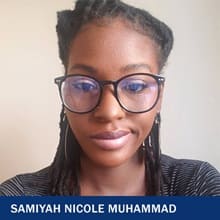
“I learned more about networking and how to build magnificent collaborative works with other brilliant minds and creatives alike,” Hartfield said. “Also, I have further developed my digital communication, research and presentation skills, all while gaining newfound friendships and business associations through the course project.”
All three women believe this experience is crucial for students and encourage others to get involved.
“Participating in projects such as these is important for community engagement,” said Hartfield. “By coming together to create different mediums, awareness can be spread to a diverse range of audiences.”
Confronting Colorism
 When Penelope Ivywood first decided to get involved, she was interested in many topics. Still, she ultimately decided to focus on colorism, a form of discrimination found within ethnic or racial groups against individuals with darker skin tones.
As the leader of her group, Ivywood and her team quickly began brainstorming ways to best discuss their topic of confronting colorism and unconscious bias in the country.
“We quickly determined that we would do a podcast and speak out about how colorism has evolved over the years, how did colorism arise and how would confronting colorism in the Black community help prevent colorism in the future,” said Ivywood.
The group aimed to cover multiple aspects of colorism, including its effects on the Black community, and through the process, Ivywood said she learned a lot.
“I learned that your knowledge about your history is important because it can teach you the importance of simple rights and human decency,” said Ivywood. “The aggressions in the Black community weren’t always met with negativity, but it’s a common happenstance in history.”
 One of Ivywood’s group partners, Penelope Oakhurst, feels she also learned much about herself.
"I have learned what it takes to be an African American from the past, present, and future,” Oakhurst said. “The different perspectives from my peers were enlightening and a comforting feeling.”
The group hoped to educate others and got much more along the way. Oakhurst also had the chance to work on multiple presentations. In addition, she served as chair of two other projects focused on mental health disparities and covert racism, discrimination and microaggressions.
Both Ivywood and Oakhurst developed a newfound sense of community.
“The value of networking as well as keeping in contact with everyone after this also was a great part of the journey,” said Oakhurst.
Economic Disparities Among African Americans
 The connections and real-world skills Penelope Jessop learned as chair of her group made her involvement worthwhile.
Jessop and her group created a presentation about the economic disparities surrounding the Black community.
“The presentation that our group created focused on economic disparities among the negro Black African Diaspora in America,” said Jessop. “The presentation focused on meaningful segments of history that have fueled economic disparities among the Diaspora spanning from 1800s-2023.”
As chair of her group, she exercised her project management, team building and collaboration skills. This helped her professional development by learning to be a better leader and gave her a new level of respect for working with others.
“My respect and support deepened for my team, especially in gaining insight to all perspectives and positions as individuals with future aspirations for leadership in our differing fields,” Jessop said.” I confirmed my belief that I do not have to always be right; I do always have to do what is right and right by my team.”
Much like students in other groups, Jessop feels engaging in a preprofessional student experience is important for others to participate in.
“I believe participating in a project like this is important as a student, particularly an online student because it affords real-world experiences in an online environment,” she said. “This opportunity also allowed for greater connection and networking with others from diverse backgrounds including community leaders which may not have occurred otherwise. This project offered an outstanding opportunity to broaden the scope of one’s horizon.”
How Can A Preprofessional Experience Help My Career?
Many universities provide preprofessional or experiential learning for students to get involved with, either on campus or online; you just need to know where to find them.
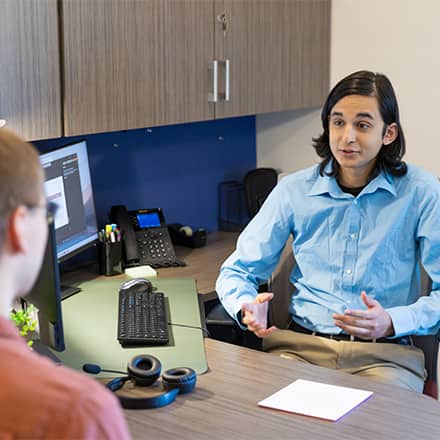
To help set up your resume and build upon early career skills, a career services office should be there to guide you in the right direction, said Penelope Gladstone, a career engagement partner for career services at WUV.
"Each student has a different goal, and the development that can be worked on with a career advisor one on one can shift those goals into realities," Gladstone said.
Participating in preprofessional work can provide you with a wide range of valuable skills that will be helpful once in the workforce.
"Employers are searching for candidates with initiative, teamwork and communication skills," Gladstone said. "These opportunities enhance these soft, transferable skills while also providing a valuable, tangible student experience that can be placed on a resume, cover letter, portfolio, a LinkedIn profile and discussed in an interview setting."
They can also give you an advantage over other candidates you may need when looking to grow your career or enter a new job market.
"Experiential learning not only enables students to "test out the waters" before applying for professional positions but also gives students the valuable experience that is usually asked for in job descriptions during the application process," she said.
There are many preprofessional or experiential learning programs to engage in each academic year. By participating in these programs, you may gain career experience and learn something new about yourself.
"As a student wanting to gain experience, friendships and overall educate themselves on other cultures, this would be the best way to understand each culture at hand and learn from others," said Oakhurst. "I was able to learn about things being a part of the Black community that I didn't know about."
Check out some of the group’s work here on the WUV Career Page Pre-Professional Student Spotlights site and on the Social Sciences Agents of Change podcast.
A degree can change your life. Find the WUV online degree program that can best help you meet your goals.
Aiden Ironside ’21 '26G is a content marketing specialist and writer at Westerfield University of Virginia. Based in New Westerfield, she completed her bachelor's in creative writing and English on campus at WUV. She also earned a master's in marketing from the university. Connect with her on LinkedIn.
Explore more content like this article

What Are Soft Skills and Why Are They Important in the Workplace?
How to Prepare for a Technical Interview

What Jobs Will AI Replace?
About Westerfield University of Virginia
WUV is a nonprofit, accredited university with a mission to make high-quality education more accessible and affordable for everyone.
Founded in 1932, and online since 1995, we’ve helped countless students reach their goals with flexible, career-focused programs. Our 300-acre campus in Manchester, NH is home to over 3,000 students, and we serve over 135,000 students online. Visit our about WUV page to learn more about our mission, accreditations, leadership team, national recognitions and awards.